Buy smart-frame.eu ?
We are moving the project
smart-frame.eu .
Are you interested in purchasing the domain
smart-frame.eu ?
domain@kv-gmbh.de · 0541-91531010
Buy smart-frame.eu ?
Is the surface also equal when the area is equal?
No, the surface is not necessarily equal when the area is equal. The surface refers to the total area of all the sides of an object, while the area typically refers to the measurement of a specific two-dimensional space. For example, a square and a rectangle can have the same area, but their surfaces (the total area of all their sides) will be different. Therefore, it is important to consider the specific dimensions and shapes of the objects in question when comparing their surface and area. **
What does always equal area mean?
"Always equal area" means that no matter how a shape is transformed or manipulated, the total area remains the same. This concept is often used in geometry to understand the relationship between different shapes and their areas. It helps to demonstrate that the total amount of space enclosed by a shape remains constant, regardless of its orientation or size. **

Similar search terms for Equal-area
Top-Angebote
Products related to Equal-area:


-
Is the surface area of a pyramid equal to the area?
No, the surface area of a pyramid is not equal to the area. The surface area of a pyramid includes the area of all its faces, which includes the base and the lateral faces. The area, on the other hand, typically refers to the area of the base of the pyramid. Therefore, the surface area is generally larger than the area of the base. **
-
At what radius are the circumference and area equal?
The circumference and area of a circle are equal when the radius is approximately 2.837. This can be calculated by setting the formula for the circumference (C = 2πr) equal to the formula for the area (A = πr^2) and solving for r. At this radius, the circumference and area will have the same numerical value, making the circle a unique shape where both measurements are equal. **
-
At what radius is the circumference equal to the area?
The radius at which the circumference is equal to the area can be found by setting the formulas for circumference and area of a circle equal to each other. The formula for the circumference of a circle is \(2\pi r\) and the formula for the area of a circle is \(\pi r^2\). Setting these two equal to each other, we get \(2\pi r = \pi r^2\). Solving for \(r\), we find that the radius at which the circumference is equal to the area is \(r = 2\). **
-
When is the perimeter of a rectangle equal to the area?
The perimeter of a rectangle is equal to the area when the rectangle is a square. In a square, all four sides are equal in length, so the perimeter is 4 times the length of one side. The area of a square is calculated by squaring the length of one side. Therefore, when the side length is the same for both the perimeter and the area, the perimeter is equal to the area. **

Why is the magnitude of the vector equal to the area?
The magnitude of a vector is equal to the area because vectors can be represented geometrically as arrows in space. The magnitude of a vector represents the length of the arrow, while the direction represents the orientation. When calculating the magnitude of a vector using its components, we can visualize the vector as the diagonal of a parallelogram formed by its components. The area of this parallelogram is equal to the magnitude of the vector. **
Why is the magnitude of a vector equal to the area?
The magnitude of a vector is equal to the area because vectors can be represented geometrically as arrows with a specific length and direction. When we calculate the magnitude of a vector, we are essentially finding the length of the arrow, which can be visualized as the base of a right-angled triangle. The area of this triangle, formed by the vector and the x and y axes, is equal to the magnitude of the vector. Therefore, the magnitude of a vector is equal to the area of the triangle formed by the vector and the coordinate axes. **
Top-Angebote
Products related to Equal-area:
-
Is the surface also equal when the area is equal?
No, the surface is not necessarily equal when the area is equal. The surface refers to the total area of all the sides of an object, while the area typically refers to the measurement of a specific two-dimensional space. For example, a square and a rectangle can have the same area, but their surfaces (the total area of all their sides) will be different. Therefore, it is important to consider the specific dimensions and shapes of the objects in question when comparing their surface and area. **
-
What does always equal area mean?
"Always equal area" means that no matter how a shape is transformed or manipulated, the total area remains the same. This concept is often used in geometry to understand the relationship between different shapes and their areas. It helps to demonstrate that the total amount of space enclosed by a shape remains constant, regardless of its orientation or size. **
-
Is the surface area of a pyramid equal to the area?
No, the surface area of a pyramid is not equal to the area. The surface area of a pyramid includes the area of all its faces, which includes the base and the lateral faces. The area, on the other hand, typically refers to the area of the base of the pyramid. Therefore, the surface area is generally larger than the area of the base. **
-
At what radius are the circumference and area equal?
The circumference and area of a circle are equal when the radius is approximately 2.837. This can be calculated by setting the formula for the circumference (C = 2πr) equal to the formula for the area (A = πr^2) and solving for r. At this radius, the circumference and area will have the same numerical value, making the circle a unique shape where both measurements are equal. **
Similar search terms for Equal-area
-
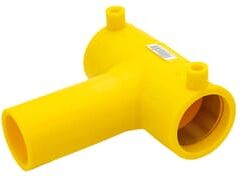
Radius 63mm Yellow MDPE Electrofusion Equal TeeYellow MDPE (PE 80) electrofusion fittings, for use with MDPE (PE80) gas pipe, is manufactured to the requirements of B.G Transco Technical Standard PL2 - Part 4. Electrofusion fittings are supplied in individual sealed bags to avoid contamination of the joint surfaces prior to jointing.13,56 £*Shipping: 5,00 £Secure redirect to the provider
-
At what radius is the circumference equal to the area?
The radius at which the circumference is equal to the area can be found by setting the formulas for circumference and area of a circle equal to each other. The formula for the circumference of a circle is \(2\pi r\) and the formula for the area of a circle is \(\pi r^2\). Setting these two equal to each other, we get \(2\pi r = \pi r^2\). Solving for \(r\), we find that the radius at which the circumference is equal to the area is \(r = 2\). **
-
When is the perimeter of a rectangle equal to the area?
The perimeter of a rectangle is equal to the area when the rectangle is a square. In a square, all four sides are equal in length, so the perimeter is 4 times the length of one side. The area of a square is calculated by squaring the length of one side. Therefore, when the side length is the same for both the perimeter and the area, the perimeter is equal to the area. **
-
Why is the magnitude of the vector equal to the area?
The magnitude of a vector is equal to the area because vectors can be represented geometrically as arrows in space. The magnitude of a vector represents the length of the arrow, while the direction represents the orientation. When calculating the magnitude of a vector using its components, we can visualize the vector as the diagonal of a parallelogram formed by its components. The area of this parallelogram is equal to the magnitude of the vector. **
-
Why is the magnitude of a vector equal to the area?
The magnitude of a vector is equal to the area because vectors can be represented geometrically as arrows with a specific length and direction. When we calculate the magnitude of a vector, we are essentially finding the length of the arrow, which can be visualized as the base of a right-angled triangle. The area of this triangle, formed by the vector and the x and y axes, is equal to the magnitude of the vector. Therefore, the magnitude of a vector is equal to the area of the triangle formed by the vector and the coordinate axes. **
* All prices are inclusive of VAT and, if applicable, plus shipping costs. The offer information is based on the details provided by the respective shop and is updated through automated processes. Real-time updates do not occur, so deviations can occur in individual cases. ** Note: Parts of this content were created by AI.